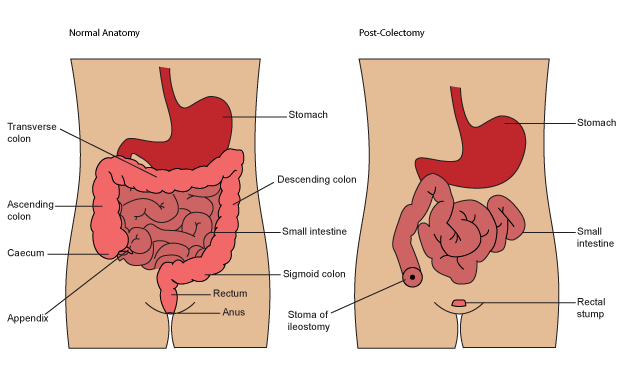
A colectomy refers to the removal of the entire colon. This surgical procedure generally follows by ileostomy surgery, which involves the surgeon pulling an end of the small intestine out through an incision in the belly. This end sticks out on the abdomen to form a stoma, which is an opening to pass out body wastes.
When does colectomy become necessary?
There are many treatment options for inflammatory bowel disease, including medications and dietary adjustments. In some cases, the IBD might fail to respond to these treatments. In such cases, your doctor may recommend a colectomy.
If the reattachment of your bowel is not an option in the future, the surgeon will give you an ileostomy. If a part of your colon is healthy, the surgeon may create a stoma by bringing a part of the colon out through a cut in the abdomen. The resultant ostomy here will be a colostomy.
After ostomy surgery, you will need to wear an ostomy bag the entire time to collect bodily wastes. Depending on why had ostomy surgery, your stoma can be permanent or temporary.
The colectomy with ileostomy surgery – how is it done?
The surgical staff will monitor your blood pressure before surgery. You might receive medication in the form of pills or through your vein. The surgical process will typically start after they give you general anesthesia.
Colectomy surgery can be keyhole or open surgery, depending on your specific circumstances. You can discuss these details with your surgeon before surgery.
Open surgery will involve a large incision that your surgeon will make to access your intestinal tract. It will help them learn about the exact amount of damage to the intestinal tract. They will remove the damaged portion then.
Laparoscopic or keyhole surgery involves several small incisions on the belly. The surgeon will insert equipment to monitor and operate the damaged portion of your GI tract. He or she may pull the colon through these incisions to treat the damaged areas outside the body. The best thing about this surgical process is that it allows quicker postoperative recovery.
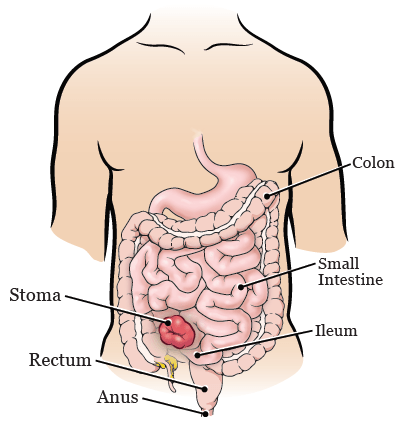
After removing the damaged part of the GI tract, the surgeon will create an ileostomy. The surgeon will suture the edges of the end of the small intestine after pulling it out through the incision. The location of the stoma of an ileostomy is generally on the right side of the abdomen.
Recovery from surgery
You may need to stay in the hospital for a week or two after surgery. It will be the initial recovery period, during which the surgical and medical staff will monitor you closely to make sure that you are doing well with your recovery. They will allow you to go home when you have no complications during this initial recovery period.
Right after surgery, you will receive your nutrition intravenously. The first kind of oral diet you may have will be in the form of liquids. You may thicken the consistency of your diet with every passing day. During the 6-week recovery duration, you will need to follow instructions from your doctor and ostomy care nurse regarding foods that you can eat and the extent of physical activity. Once your bowel recovers, you can eat anything you want and play your favorite sports. You may have to avoid heavy lifting, though.
With an ostomy, you will need to take care of your stoma and the skin around it. It means that you will need to ensure a tighter seal between the skin barrier of the ostomy appliance and the peristomal skin. You can talk about it with your ostomy care nurse.
 Ileostomy Surgery